You Might Not Hate Exercise. You Might Just Hate Your Workout.
How to stop forcing yourself through workouts you dread and find a way of moving that you genuinely enjoy.
It is a familiar cycle. You join a gym, download the app, decide which three days you are going to work out, and feel genuinely motivated for the first week.
Then the newness wears off. The treadmill is still boring, the weight room still feels awkward, the class you chose is scheduled at the worst possible time, and another monthly membership starts quietly charging your card while you wonder why you can never seem to “stick with exercise.”
The usual conclusion is that you need more discipline. Maybe the real problem is that you keep trying to make yourself enjoy a version of exercise that has never suited you.
You may not hate moving your body. You may hate fluorescent lighting, crowded weight rooms, running without going anywhere, instructors who shout, or workouts chosen entirely because someone online said they burn the most calories.
Maybe your version of exercise is a dance class. It could also be swimming on a quiet morning, playing pickleball with a friend, lifting weights in a small group, walking your dog through a different neighborhood, or taking a beginner boxing class where the music is good and the hour passes quickly.
Finding movement you enjoy is not taking the easy way out. It may be the first time you have built an active life around the person you actually are.
The Short Version
Disliking the gym does not mean you dislike exercise. You may need a different activity, environment, pace, or reason for moving.
Stop choosing workouts only by calories burned, fastest results, or what currently looks impressive online. A theoretically perfect workout is not very useful when you dread doing it.
Think about the experience you want: social, energetic, peaceful, playful, outdoors, structured, or skill-based. Then look for movement that creates more of that feeling.
Use drop-in classes and trial passes before making a long commitment. Treat the first few visits as information, not an audition you have to pass.
The goal is not to discover your one perfect workout forever. It is to find a way of moving that fits your life well enough that you are willing to return.
Want To Follow Along?
Download the free Start Living It Find A New Way To Move printable to discover what kind of movement fits your personality, schedule, and real life—then choose one low-pressure thing to try this week.
Download the Free Find A New Way To Move Printable
Stop Trying To Become A Gym Person
We have created a strangely narrow picture of what an active woman looks like.
She wakes up early, puts on a matching set, walks confidently into a gym, knows exactly how to adjust every machine, and never spends ten minutes pretending to check her phone because she cannot figure out where the resistance bands are.
If that sounds enjoyable to you, wonderful. A gym can be convenient, energizing, and exactly the right place for someone who likes the equipment, atmosphere, flexibility, or independence it offers.
But going to a gym is not a personality upgrade.
You do not need to become someone who loves treadmills, crowded locker rooms, or a 5:30 a.m. boot camp in order to become stronger and more active.
At this point in your life, you have probably forced yourself through enough things because they were supposedly good for you.
Your workout does not need to become one more place where you perform enthusiasm for a life that does not fit.
Maybe You Do Not Have A Motivation Problem
It is difficult to stay motivated for something that is consistently unpleasant.
If every workout feels boring, intimidating, inconvenient, overly competitive, or disconnected from anything you care about, losing interest is not especially mysterious.
Imagine a woman who keeps paying for a large gym because she thinks that is what serious exercise looks like. She goes sporadically, spends thirty minutes watching the clock, and leaves feeling relieved that it is over.
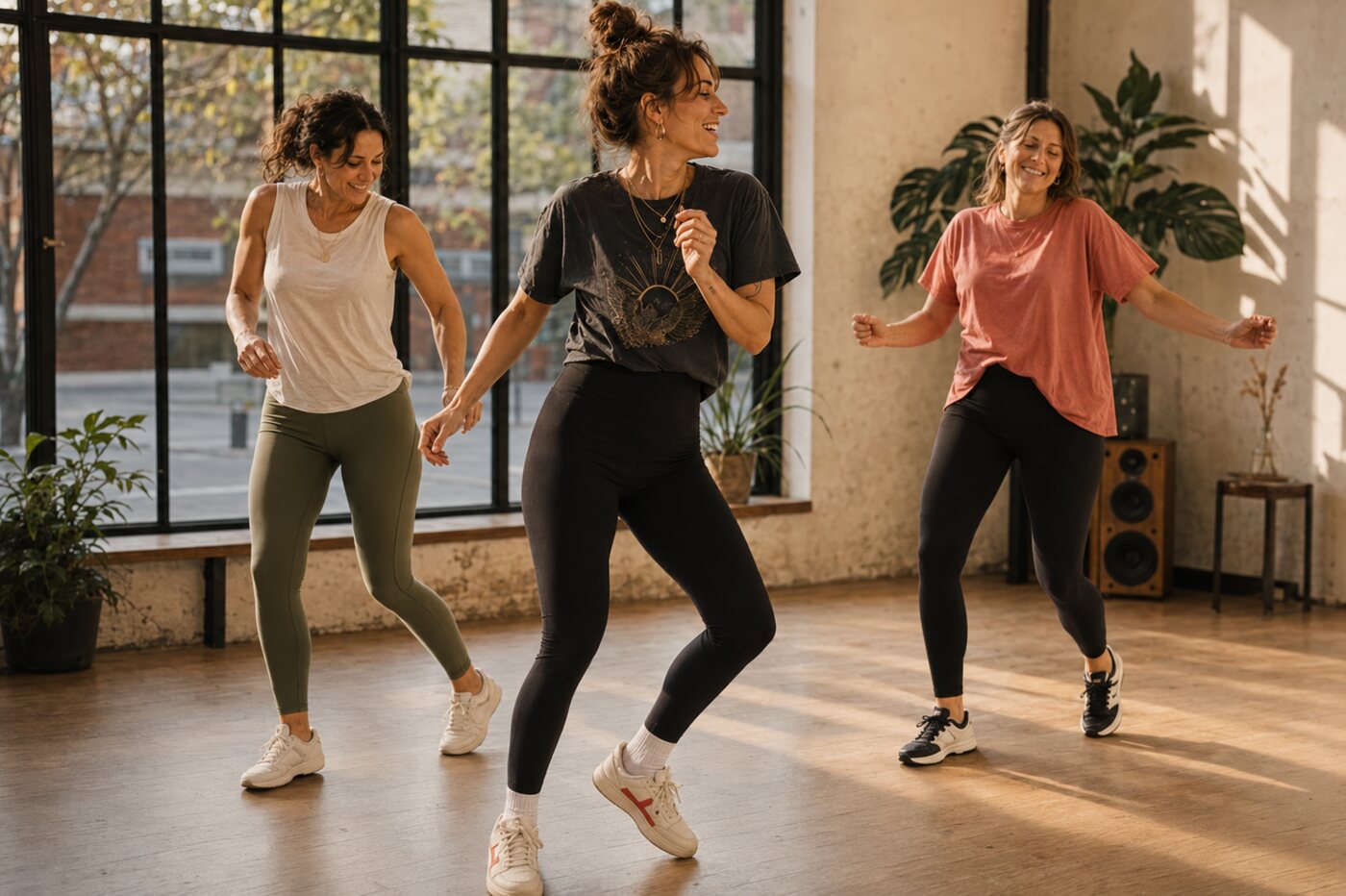
Then she tries a beginner dance class with a friend. The playlist is fun, nobody expects her to know the choreography, she laughs when she turns the wrong direction, and the class ends before she has checked the time once.
She did not suddenly develop more willpower. She found an experience she wanted to repeat.
That distinction matters because motivation is often treated as something you must manufacture before every workout.
Enjoyment creates its own kind of momentum: you begin looking forward to the instructor, the music, the people, the progress, or simply the way you feel afterward.
Your Workout May Have An Atmosphere Problem
Sometimes the activity is not the problem. The room is too crowded, the music is irritating, the instructor makes beginners feel behind, or the entire space seems designed for twenty-five-year-olds filming themselves between sets.
You might enjoy strength training but hate wandering through a large weight room trying to remember what to do next.
A small-group strength class, a women-focused studio, or several sessions with a supportive trainer could make the same basic activity feel completely different.
You might enjoy dancing but dislike bright mirrors and complicated choreography. A community line-dancing night, low-pressure cardio dance class, beginner salsa lesson, or class built around familiar pop music could feel more welcoming.
You might even like the gym but hate your current gym. Lighting, cleanliness, parking, commute time, music, class size, staff, and the general energy of a space all affect whether you want to return.
This is why finding a good fit is not just about asking, “What exercise should I do?” A better question is, “Where and how do I enjoy moving?”
Choose The Experience Before You Choose The Workout
Fitness advice usually begins with an outcome.
Decide whether you want to lose weight, build muscle, improve endurance, or become more flexible, and then select the most efficient plan.
Goals can be useful, but they are not the only place to begin. If you have repeatedly abandoned plans that looked excellent on paper, start with the kind of experience you would actually like to have.
If You Want Something Social
Try a walking group, beginner pickleball clinic, recreational tennis lesson, dance class, hiking club, or small-group fitness class. You may be far more consistent when showing up means seeing people you enjoy rather than completing another task alone.
If You Want Energy And Music
Look at dance cardio, cycling, boxing, step classes, rebounder workouts, or anything with a playlist that makes you want to move. The right music and instructor can turn forty-five minutes from something you endure into the liveliest part of your day.
If You Want Calm
Consider yoga, Pilates, swimming, walking outside, tai chi, or a quieter strength studio. Movement does not need flashing lights, leaderboards, or someone yelling over a remix to be effective.
If You Want To Learn Something
Try salsa, line dancing, martial arts, tennis, golf, indoor climbing, roller skating, or paddleboarding. Skill-based movement gives you something more interesting to notice than the number of minutes remaining.
If You Want To Feel Strong
Explore beginner strength training, kettlebells, resistance classes, rowing, boxing, or a trainer who teaches instead of intimidates. Feeling your body become more capable can be far more motivating than chasing a smaller number on a scale.
If You Want To Be Outside
Try neighborhood walks, local trails, kayaking, outdoor yoga, cycling, gardening, or a weekend walking group. You may discover that fresh air and changing scenery were the missing parts of every indoor routine you tried to force.
Maybe Your Version Of Exercise Is A Dance Class
There is something revealing about the sentence, “I have always wanted to try that.”
Women say it about salsa, boxing, reformer Pilates, pickleball, aerial yoga, swimming, roller skating, and beginner strength classes, then continue doing a workout they already know they dislike.
The class that catches your attention is worth noticing. Curiosity will not guarantee that you love it, but it is a much better starting point than obligation.
An adult dance class does not require you to be coordinated, perform onstage, or become “a dancer.”
You are allowed to show up because the music sounds fun, you want to get out of the house, and moving for an hour feels better than spending another evening scrolling on the couch.
The same is true of any activity. You do not need an ambitious identity or a dramatic goal before you are allowed to participate.
Stop Asking Which Workout Burns The Most Calories
The fitness internet is very good at turning movement into a ranking system.
Which workout burns the most, changes your body fastest, produces the best before-and-after photo, or looks most impressive in a thirty-second video?
Those questions can make an enjoyable activity seem less valuable because it is not intense enough.
A dance class becomes “just for fun,” walking becomes something that does not count, and swimming becomes less appealing than the workout an algorithm has decided women should be doing this month.
There is nothing wrong with wanting results. The problem begins when the pursuit of the theoretically best result repeatedly leads you toward exercise you avoid.
The CDC’s guidance for adults explicitly notes that some physical activity is better than none and that activity can be spread throughout the week.
The federal Move Your Way campaign includes walking, running, dancing, and playing because physical activity does not have to happen in one specific kind of room.
Enjoyment does not replace every other consideration.
Your health, abilities, safety, and goals still matter, but they should be part of the decision rather than reasons to ignore whether you can stand the life required by your plan.
How To Find A Workout Class Or Gym You Actually Like
Finding your version of movement does not require a color-coded research project. It requires a few honest questions and permission to experiment without turning every trial class into a new identity.
1. Search For The Real Experience You Want
Do not search only for “gyms near me.” Try phrases such as “beginner adult dance classes,” “women’s beginner strength training,” “small-group fitness,” “beginner pickleball clinic,” “walking clubs,” “adult swim lessons,” or “low-pressure exercise classes” along with your city.
The more specific search will often uncover independent studios, recreation centers, community groups, and classes you would never find by looking only for traditional gyms. A local dance studio or neighborhood rec center may suit you better than the newest luxury fitness club.
2. Investigate The Atmosphere
Read reviews for clues about how beginners are treated, whether instructors offer modifications, what the general age range is, and whether the space feels friendly or competitive. Photos and social media can also reveal whether the room looks welcoming or makes you tired before you even arrive.
Call or message if the class description is vague. Asking, “Is this truly beginner-friendly, and what should I expect the first time?” can save a surprising amount of anxiety.
3. Try Before You Build A New Life Around It
Use a drop-in class, introductory offer, guest pass, or short trial when possible. Avoid buying a twelve-month membership during the emotional high that follows one exciting tour.
One good class does not require a new wardrobe, premium equipment, five weekly reservations, and an identity overhaul by Friday. Let yourself like something before turning it into another demanding project.
4. Treat The First Class As Information
Your first visit is not a test of whether you are athletic enough to belong. You are learning about the instructor, pace, music, room, people, commute, and how the experience fits into your day.
Some awkwardness is normal when everyone else seems to know where the mats are stored. That discomfort often fades quickly, but feeling unsafe, belittled, pressured, or completely miserable is not something you need to push through to prove a point.
5. Check The Ordinary-Tuesday Test
A workout can be enjoyable and still be wrong for your life. A studio forty minutes away, a class that ends past your bedtime, a price that makes you resent every visit, or a schedule that only works during unusually quiet weeks will be difficult to maintain.
Picture going on a normal Tuesday when work ran late and you still need groceries. The right choice does not have to be effortless, but it needs to fit often enough that attending does not require a weekly act of heroism.
6. Notice How You Feel About Returning
Afterward, ask whether any part of the experience felt good. Did the time pass quickly, did you like the music, did you feel comfortable with the instructor, and can you imagine becoming more confident there?
You do not need to feel euphoric or declare that the class changed your life. A simple “I would do that again” is enough reason for a second visit.
What If You Feel Awkward At First?
Almost every beginner believes everyone is watching her.
Most people are actually thinking about their own form, trying to follow the instructor, adjusting their leggings, or wondering whether they are facing the correct direction.
Arrive a few minutes early and tell the instructor you are new. Choose a spot where you feel comfortable, ask about any equipment before class begins, and let your goal be participation rather than looking polished.
There is a difference between disliking an activity and disliking being new at something. If you enjoyed pieces of the experience but felt clumsy, give yourself two or three visits before deciding.
Confidence usually arrives after participation, not before it. You do not have to wait until you feel like the kind of woman who takes a dance class to become the woman who takes one.
Your Workout Does Not Have To Do Everything
The activity you enjoy does not need to satisfy every fitness goal by itself.
A dance class might give you joyful cardio while two short strength sessions support your muscles, or regular walks might become the foundation you build on gradually.
This takes pressure off the search.
You are not selecting one perfect workout that must carry your health for the rest of your life; you are finding one good way to move more often.
If you have an injury, chronic condition, concerning symptoms, or questions about what is safe for you, talk with a qualified healthcare professional.
A knowledgeable instructor should also welcome questions, offer appropriate modifications, and stay within the limits of her expertise.
Your Elevated Standard This Week
Choose one form of movement you have been curious about and find one beginner-friendly way to try it.
Book the drop-in class, save the walking-group information, tour the smaller gym, or text the friend who keeps asking you to play pickleball.
Do not promise yourself that this will become your new five-day-a-week routine. Your only job is to collect one honest piece of information: Did I enjoy this enough to try it again?
Frequently Asked Questions
How Do I Find A Workout I Actually Enjoy?
Begin with how you want the experience to feel rather than which workout seems most effective. Decide whether you want something social, energetic, calming, outdoors, skill-based, or strength-focused, and test one activity that matches.
Do I Need To Join A Gym To Get Enough Exercise?
No, physical activity can happen in studios, pools, parks, community centers, sports leagues, your neighborhood, or your living room. A gym is one useful option, but it is not the definition of an active life.
How Many Times Should I Try A Class Before Deciding?
If the class felt safe and you enjoyed parts of it but felt awkward, two or three visits can help you separate normal beginner discomfort from a poor fit. You do not owe repeated visits to a place that felt unwelcoming, painful, aggressively sales-focused, or completely wrong for you.
What If The Classes I Like Are Too Expensive?
Look for recreation centers, community colleges, library programs, local clubs, parks departments, introductory packages, and classes that allow occasional drop-ins. You can also combine one paid class you genuinely value with free walks, home strength sessions, or outdoor activities.
Does Dancing Really Count As Exercise?
Dancing can provide moderate- or vigorous-intensity aerobic activity depending on the pace, and some forms also challenge strength, coordination, and balance. More importantly, it gets you moving in a way you may be happy to repeat.
What If I Have Not Exercised In A Long Time?
Choose a true beginner option, tell the instructor you are returning to movement, and increase gradually rather than trying to prove what you can do on the first day. If you have medical concerns, pain, or limitations, ask a qualified healthcare professional what kind of activity is appropriate for you.
Final Thoughts
Maybe you were never lazy, unmotivated, or bad at exercise.
Maybe you kept choosing workouts designed for an imaginary version of yourself—the woman who loves early alarms, crowded gyms, punishing classes, and routines built entirely around results.
Your real version of movement may be less impressive online and much better in your actual life.
It may look like laughing through a dance class, meeting a friend at the pickleball court, swimming before work, lifting weights with an instructor you trust, or walking outside with a playlist you love.
The healthiest workout is not automatically the trendiest, hardest, or most optimized one. It is the one that helps you feel stronger, more alive, and genuinely glad you showed up.